
All About Cabochons in Jewelry
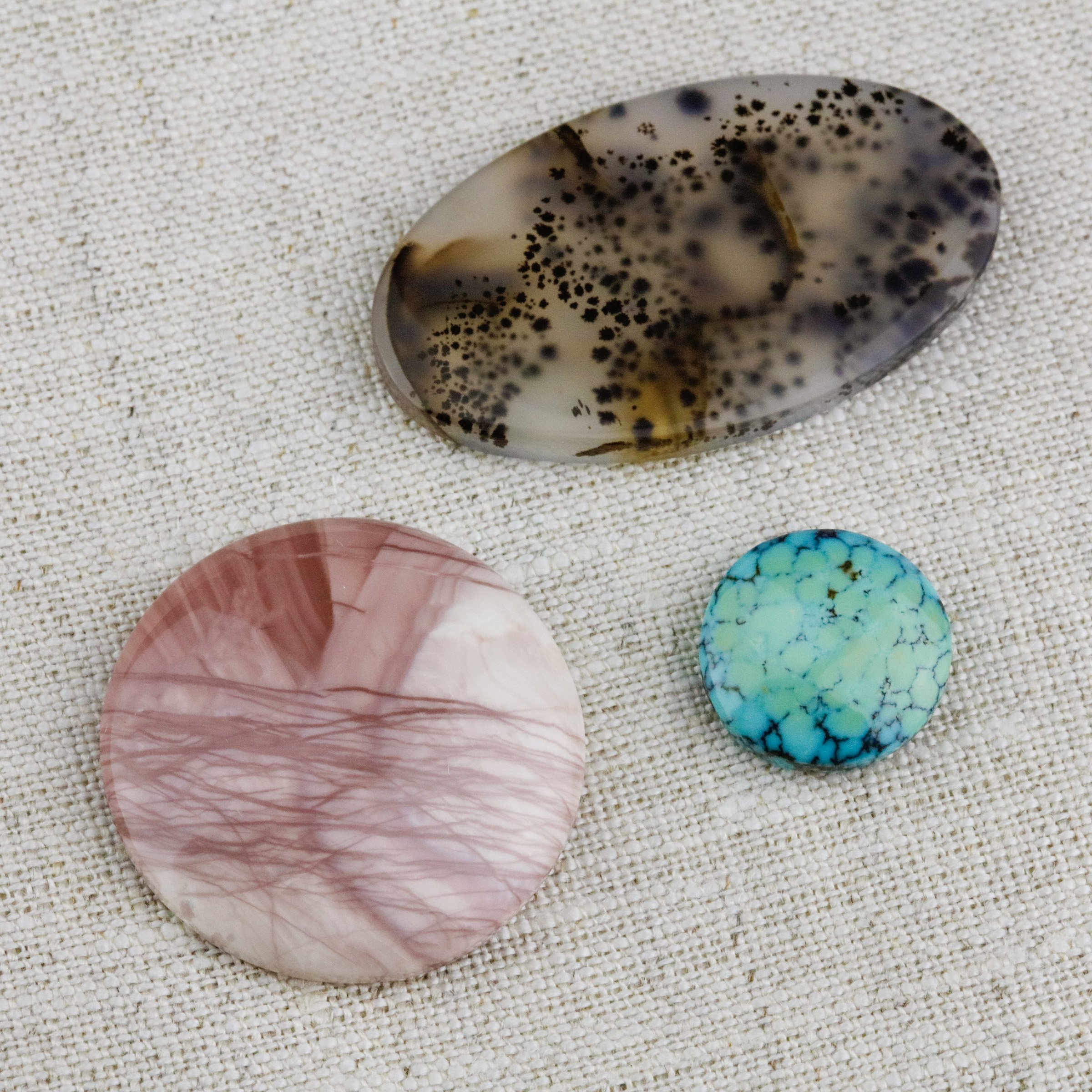
Three sample of cabochons: Montana agate (top), Imperial jasper (left), and Hubei turquoise (right)
What are stone cabochons?
Cabochons are precious or semi-precious stones that are cut and shaped to have a flat base and a domed surface. The polished surface bring’s out the stones natural color, luster, pattern, or even light play in the case of transparent or semi-transparent stones.
Cabochons are traditionally cut in circles or ovals, but they can be any shape from geometric to freeform.
Stones aren’t the only material used in cabochons, though. Alternative cabochons can be made with glass, metal, resin, wood, and other natural or man-made materials.
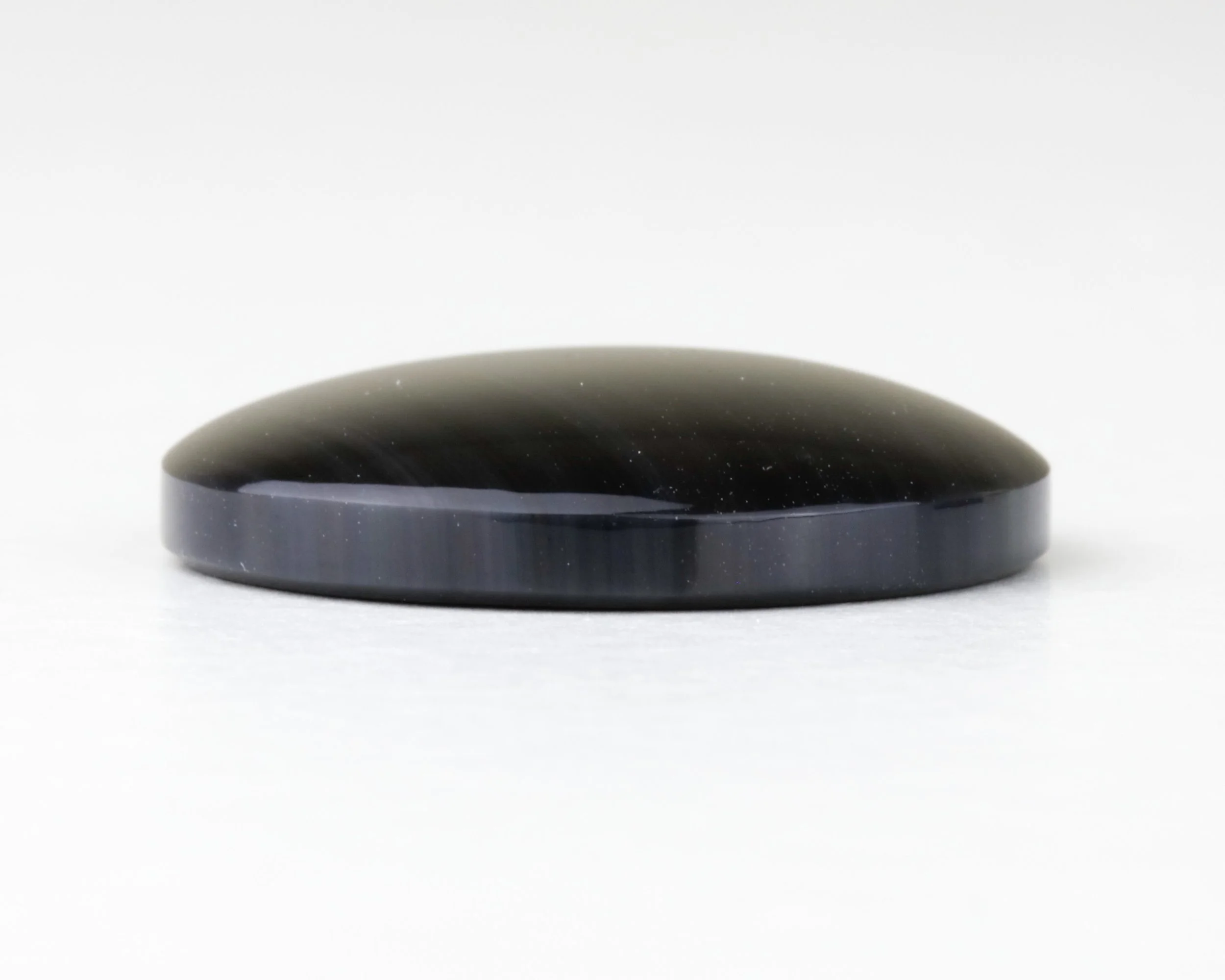
Profile of an obsidian cabochon, where you can see the flat base and carefully polished dome top. The belt around the stone that is perpendicular to the base is called the girdle.
How are cabochons made?
Cabochons are often made with specialty equipment like a cabbing machine or flat lap. In my jewelry studio, I use a cabbing machine that has six rotating wheels with a water drip system. Each wheel has a different grit and is used to progressively shape then polish the material from a piece of rough rock to a smooth, shiny stone.
The art of cutting handmade stone cabochons is called "lapidary.”
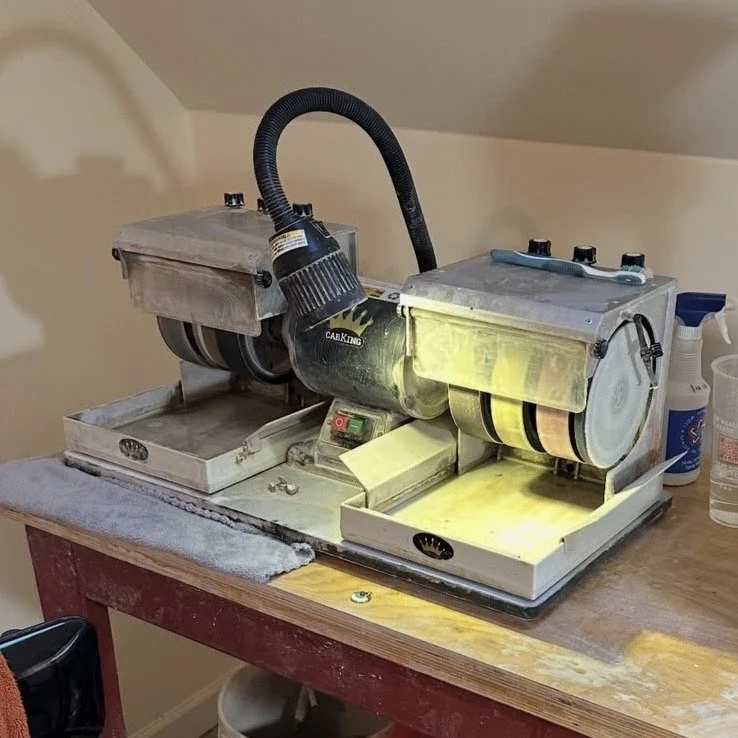
This is the machine I use to cut my cabochon: a CabKing cabbing machine.
Why are cabochons made?
The unique cut of a cabochon—with a flat bottom and domed top—lends itself to be set into jewelry designs to add pops of color, shine, and even pattern to pair with the metal. For me, colored stones liven up a metal jewelry design while highlighting the intrigue of the natural stone.
Besides uses in jewelry, cabochons can also be collected and exhibited as excellent specimens of a stone, or be used in a variety of other art or craft projects.

Here is an example of a self-cut hyalite opal cabochon set in a bezel for a handmade ring in my hyalite opal collection.
How are cabochons set in jewelry?
Cabochons are usually set in bezel settings, where metal wire is formed around the outline of the stone and soldered to a backplate. Once the stone is sitting in the ring of metal wire, the metal border is pushed over the curvature of the dome to hold the stone in place.
I specialize in cobblestone inlay—which is essentially an array of hand-cut cabochons set closely together into a metal recess in jewelry—but other ways you can set cabochons are with prongs or wire wrapping.
In most jewelry, natural stone cabochons are the focal point of the design—which share a bit of the wearer’s story.