
What does “lapidary” mean related to jewelry?
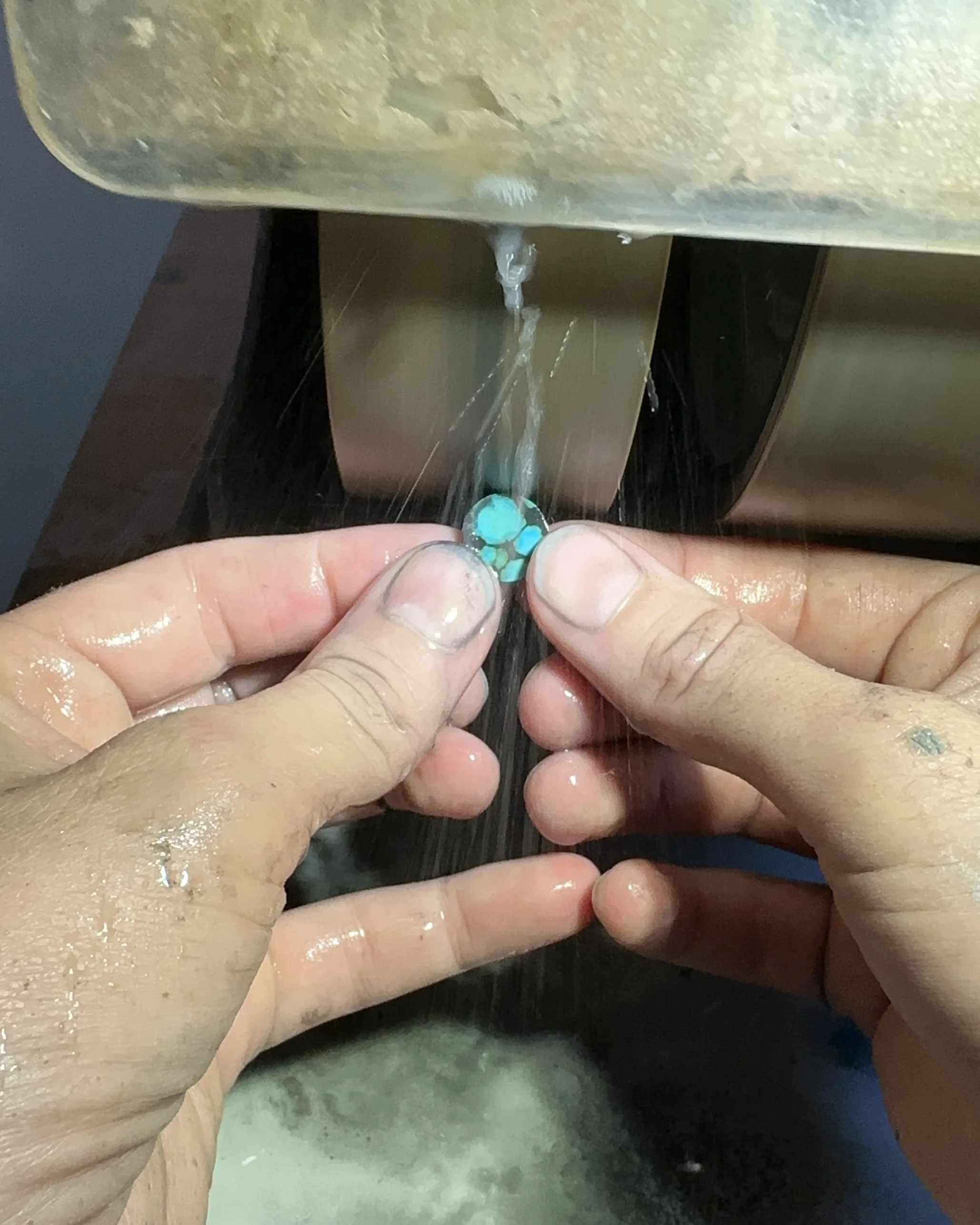
Lapidary involves using specialty equipment to hand-cut stones. This piece of Hubei turquoise is being cut for an inlay pendant.
What is lapidary?
Lapidary is the art of cutting, shaping, and polishing precious or semi-precious stones for ornamental or artistic purposes, but broadly, it isn’t limited to just jewelry—stones can be cut as small sculptures or decor, as adornments for the home (like custom stone handle pulls or stone-handled knives), as accents for office items (like a stone sleeve for a pen), and as anything a lapidary artist can come up with.
While some of this shaping and polishing can be done with simple sandpapers and polishing compounds, professional lapidary artists have specialized equipment for this process. It still involves human hand-precision, but it can speed up working time.
What stands out with lapidary is that it isn’t mass-produced, with a focus on craftsmanship, artistry, and imagination.
Lapidary in Jewelry
At the core of adding lapidary to jewelry design is the desire to add more personal touches through the extra level intricacy, color, and shine that natural stones bring to the table.
The most common ways you’ll encounter lapidary in jewelry are with cabochons and faceted gemstones, which involves precision on a small scale.
Cabochons are precious or semi-precious stones that have a flat base with a domed top and are typically set in jewelry with a bezel. The stone can either be opaque or transparent depending on the jewelry’s aesthetics, and can be any shape but are typically round or oval.
Facets are created with transparent stones that have multiple flat, polished, geometric “faces” on the top and bottom of a stone. This creates a prism to bounce light inside the stone, giving the stone a distinct sparkle. Faceted stones are most commonly set in prongs, but can be seen in bezels and flush settings too.
Specialized Lapidary Techniques In Jewelry
Additional lapidary techniques can be added to the base shapes of cabochons or faceted stones for extra embellishment: stone inlay, intarsia, carving. This is where lapidary artists can set themselves apart from others even further with artistically cut stones for jewelry designs.
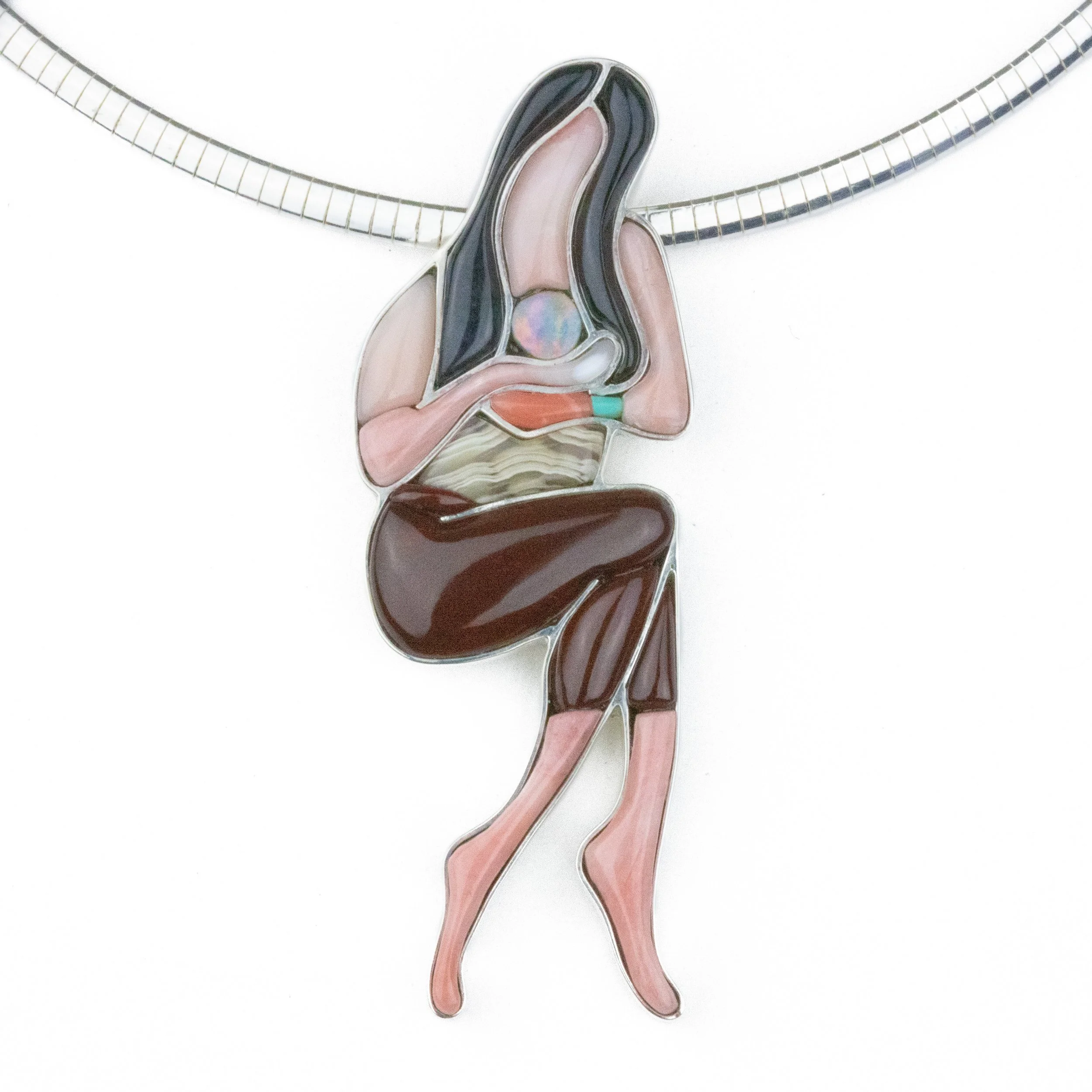
An example of cobblestone inlay with one of my signature figurative pendants. Stones include Pink Lady opal. Australia opal, lace agate, obsidian, and red jasper set in sterling silver.
Inlay jewelry is where a metal recess is created in a jewelry design. Natural stones are then hand-cut to precisely fit the recess, set with tension and epoxy, then cut and polished flush with the surface of the metal. Cobblestone inlay is a variation of this where instead of a flush surface, each stone is domed and polished separately.
Intarsia is a closely-fitting geometric mosaic made with two or more stones. It is often inlaid into jewelry designs, but the term refers to just the free-standing stone.
Stone carving is when specialized diamond and polishing bits are used to cut shapes in stone other than a typical cabochon or faceted stone, usually emphasizing the three-dimensional possibilities of a piece of stone rough.
The lapidary arts can offer additional creative freedom for jewelry artists to make jewelry that makes the wearer excited to put it on.