
What is cobblestone inlay jewelry?
Updated May 2026

Persephone is one of my signature figurative inlay pendants that’s made using the cobblestone inlay technique (sold).
If you’ve ever visited a historic town on the east coast, you’re familiar with those ankle-twisting cobblestone roads made with individual stones trapped in mortar.
Cobblestone inlay jewelry takes that same concept, but are instead made with semi-precious or precious stones—using epoxy as the “mortar” to hold it all together.
The word “cobblestone” comes from the English word “cob,” which is an adjective to describe something as “round or lumpy.”

Here is a side profile of one of my figurative inlay pendants where you can see what a cobblestone inlay jewelry piece is all about.
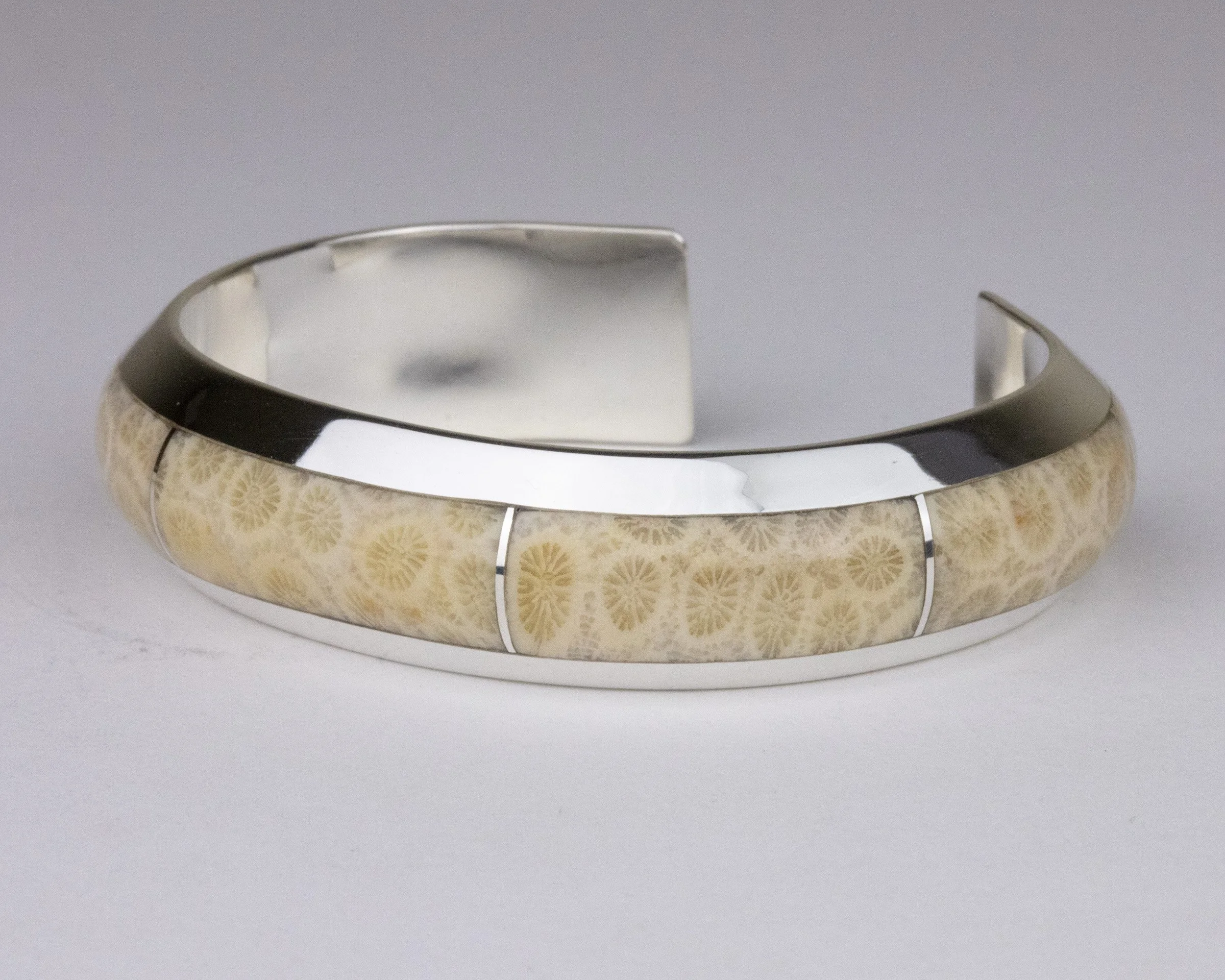
If a flush-cut inlay is like today’s asphalt roads with a flat and even surface (like in the sterling silver agatized coral cuff bracelet pictured here), cobblestone inlays are distinct in that each stone is cut, shaped, and polished separately from each other to create a more interesting surface texture.
You may have even heard of cobblestone inlays (or cobbled inlays) also referred to as “pillow inlays” for the distinct cushioned surface of the stones.
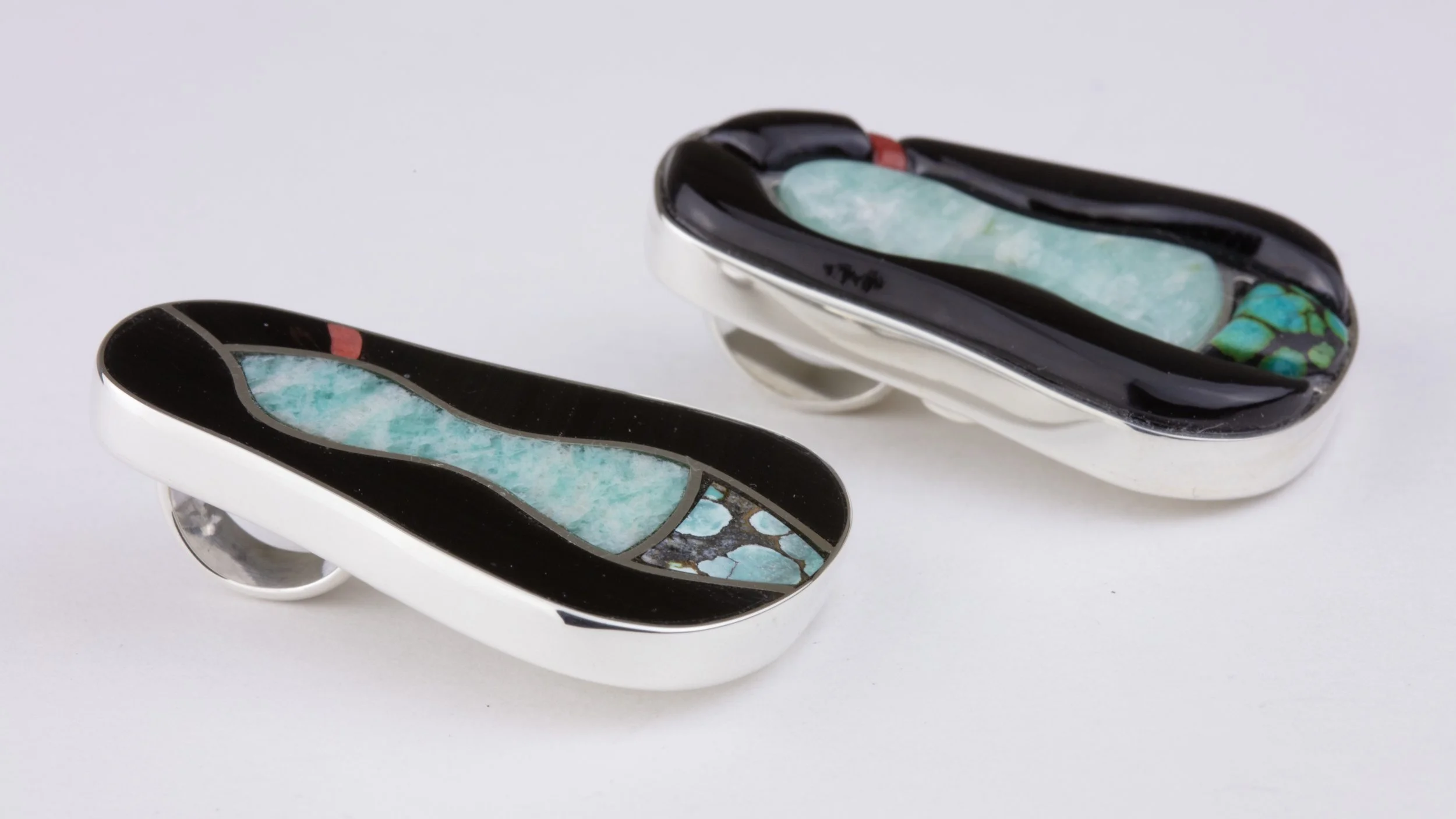
This is a side-by-side comparison of a flush-cut inlay pendant (on the left) and a cobblestone inlay pendant (on the right).
While traditionally most stones in a cobble are domed this way, some contemporary lapidary jewelers do something a little different where inlaid stones have a flat surface with just a small bevel at the edges of each stone to distinguish one from the next.
Pieces in a cobblestone inlay can vary in size, shape and height, so they don’t need to be as homogenous as actual cobblestone roads.
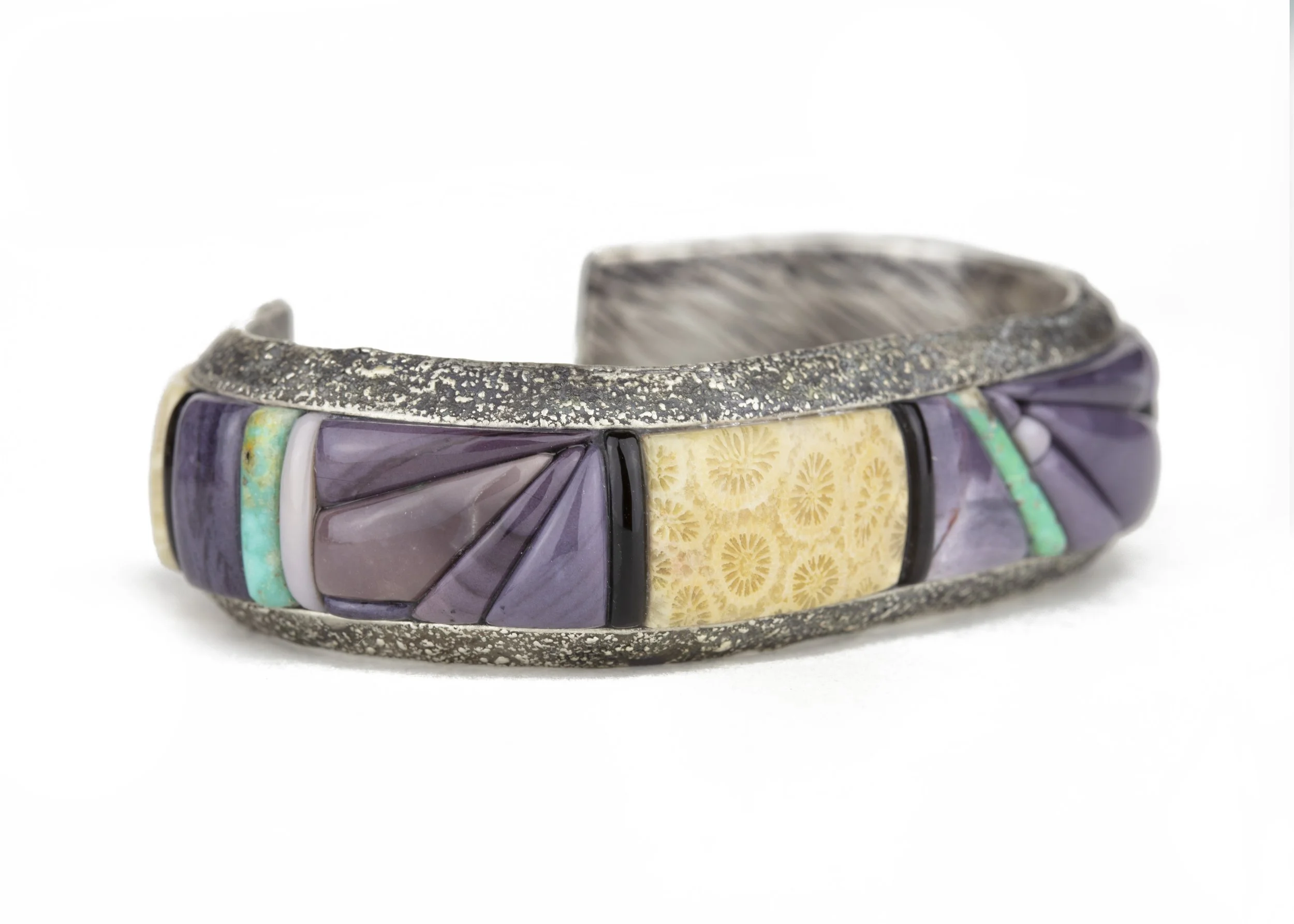
This is an example of one of my cobblestone inlay cuff bracelets called Garden in the Galaxy, where there is variety in the shape and size of each domed stone.
I personally prefer cobblestone inlays to flush-cut inlays because it accentuates an inlay artist’s skill, attention to detail, and passion to devote time to hand-cut and polish each stone separately—which often involves a lot of very tiny pieces of stone.
And to me, that extra effort is what gives cobblestone inlays a richness that is incomparable.