
Inlay vs. Bezel Settings in Jewelry
In jewelry, there are many ways to hold stones in a design. Bezel settings and inlay are two different types of stone settings that may look somewhat similar at first, but are made differently and produce distinctive looks.
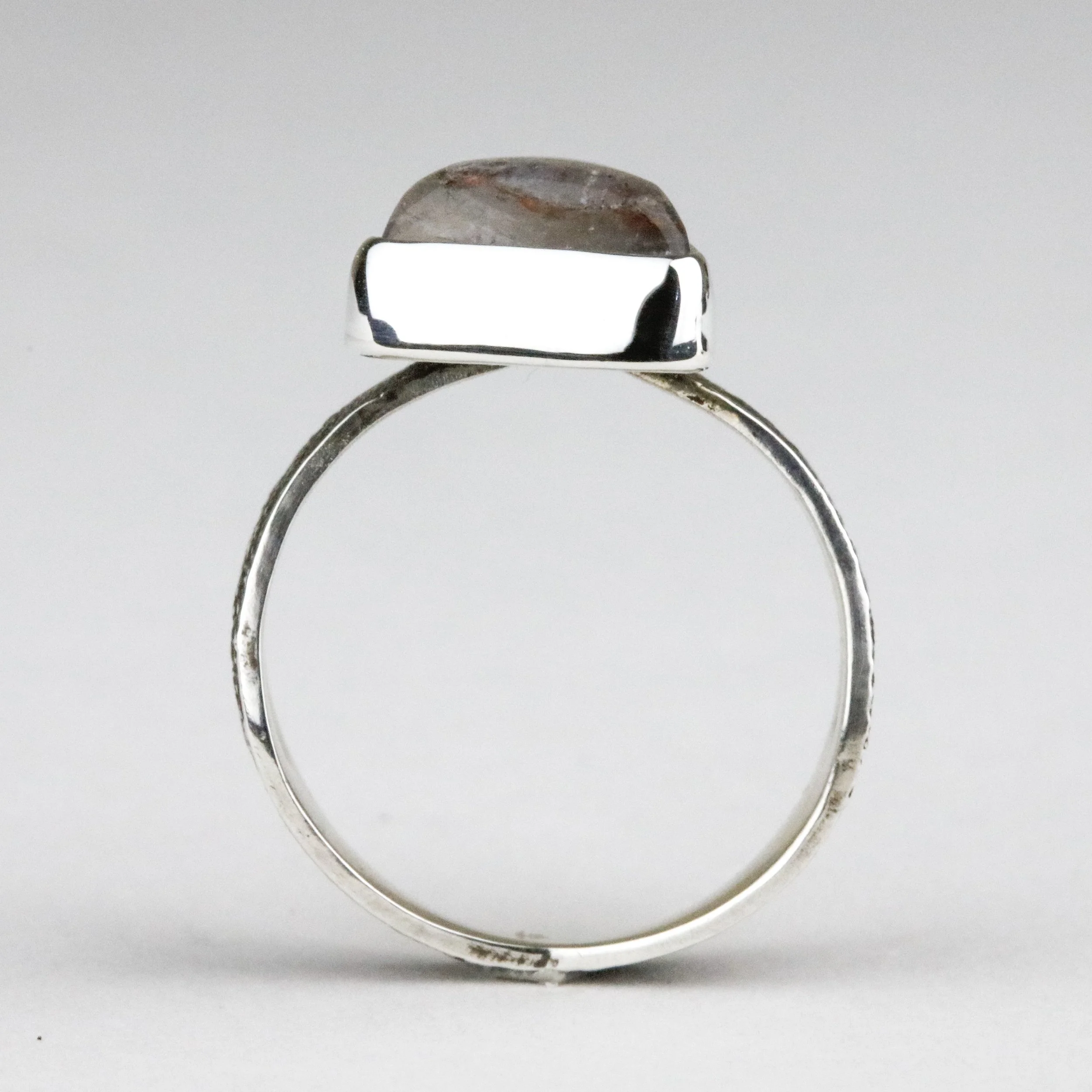
An example of a bezel-set hyalite opal ring. If you look closely at the top of the bezel, you can see the metal is slightly curved inwards over the curvature of the stone to hold it in place.
What is a bezel setting in jewelry?
A bezel setting is a strip of metal that is made to encircle a stone, then soldered to a sheet of metal called a backplate. The top strip of metal is then folded over the stone to hold it in place. Special bezel-setting tools are used to push the metal over the curved dome of a polished stone.
This is the most common type of setting you’ll see with cabochons—stones that have a flat bottom and a domed top—but you may also see them with faceted stones too.
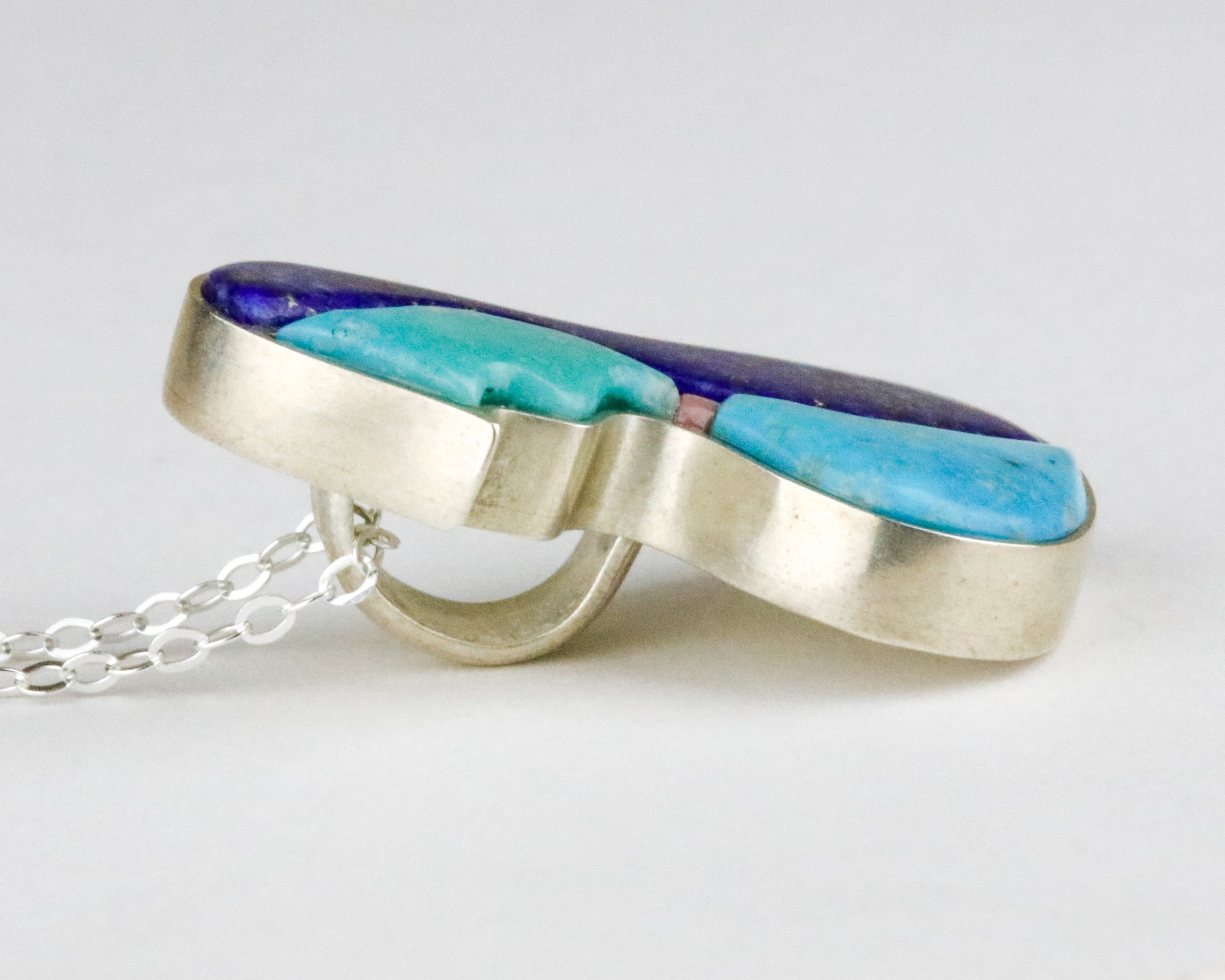
An example of an inlay setting with one my signature figurative inlay pendants.
What is an inlay setting?
Inlays are made by creating a recessed space in the metal of a jewelry design, cutting a stone to fit that recess snuggly, then using a high-strength epoxy to hold it in place—along with the tension of the carefully cut stone.
Flush-cut inlays are where all of the stones are cut and polished to be level with the surface of the metal, whereas in a cobblestone inlay, the stones are domed individually to create a textured surface.
In the inlay example above, you can see that it’s similar to the bezel setting using the strip wire, but the top edge of the strip metal is straight and not pushed over the edge of the stones as it is set with the epoxy instead.
How are inlays visually different bezel settings?
In a piece of inlay jewelry, an artist can nest multiple stones right next to each other without a metal barrier between each stone, creating a more seamless look than if you tried to do the same thing with bezel settings.
While inlays may have a silver border around them you’ll subtly notice that the metal isn’t folded over the stone like in a bezel.
With inlays, the jeweler is cutting their own stones versus just purchasing them from lapidaries (or stone cutters). That means they can cut the stones to fit a design, rather than trying to design around a pre-existing stone.
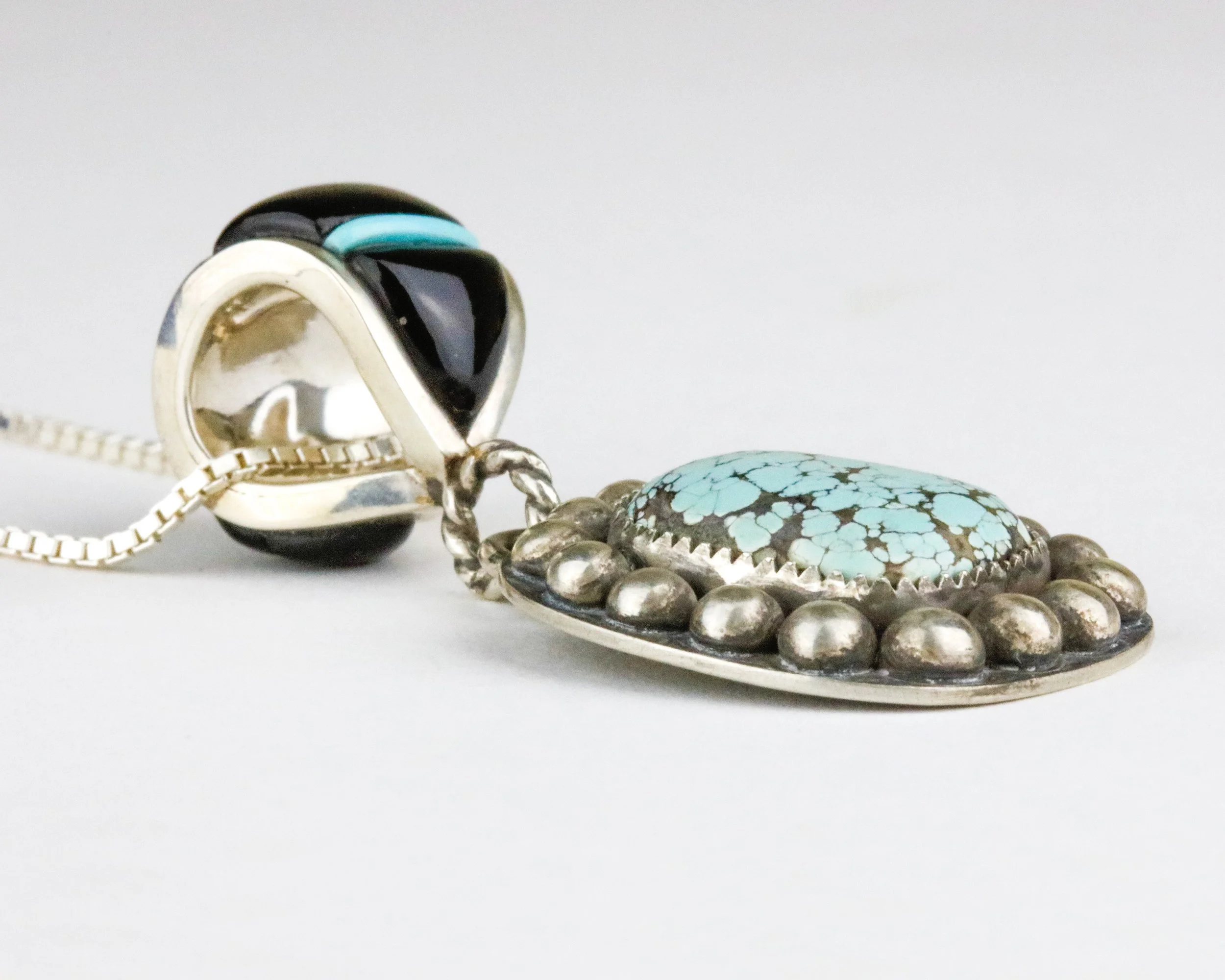
This pendant includes both bezel and inlay settings. The Hubei turquoise center stone (on the right) is held in with a saw-tooth bezel and the bail (the part the chain goes through) is inlaid.
Why would I pick inlay over bezels (or vice versa)?
There’s no single answer for this as it’s based on what you’re drawn to—you know right away what you like in jewelry design.
For me when I create my figurative cobblestone inlays, inlay allows me to create an almost all-stone design that doesn’t interrupt the outline of the female figure. I can combine multiple stones and organic-shapes into my design to “paint” pictures with stone, which wouldn’t be the same if done with bezel settings.
I think the biggest consideration to pick between one over the other would be lifestyle: are you the type to keep your jewelry on in the ocean? Wear your rings while at the gym? I talk about this more in the next section.
Are bezels more durable than inlays?
When it comes to durability, often more about regular care when you’re wearing your jewelry to keep jewelry with inlay or bezels looking their best.
But because inlays are made with epoxy, and epoxy can degrade over time depending on what environments it is exposed to, it could last anywhere from 10-40 years depending on the epoxy formula that the artist has used. (I’ve had some vintage inlay repairs that have lasted up to 70 years before needing a stone replacement). Unless the stone has been damaged during wear, bezel settings can last indefinitely.
That being said, inlay jewelry has the benefit of having the epoxy to act as a shock absorber under the stone. This matters with softer stones that can crack much easier. In this way, inlays can protect stones better than bezel-set stones.
Though some jewelry is never taken off, I always recommend that jewelry stay out of pools and oceans as the chemicals or saltwater can damage both the stones and the metal. This will significantly extend the life of your jewelry.
I delve more into how to take care of inlay jewelry specifically here →
Whether you pick inlaid stone or bezel-set stones often depends on the look your going for and what best matches your lifestyle to ensure that your stones look eye-catching for years to come.