
How are stones set in inlay jewelry?
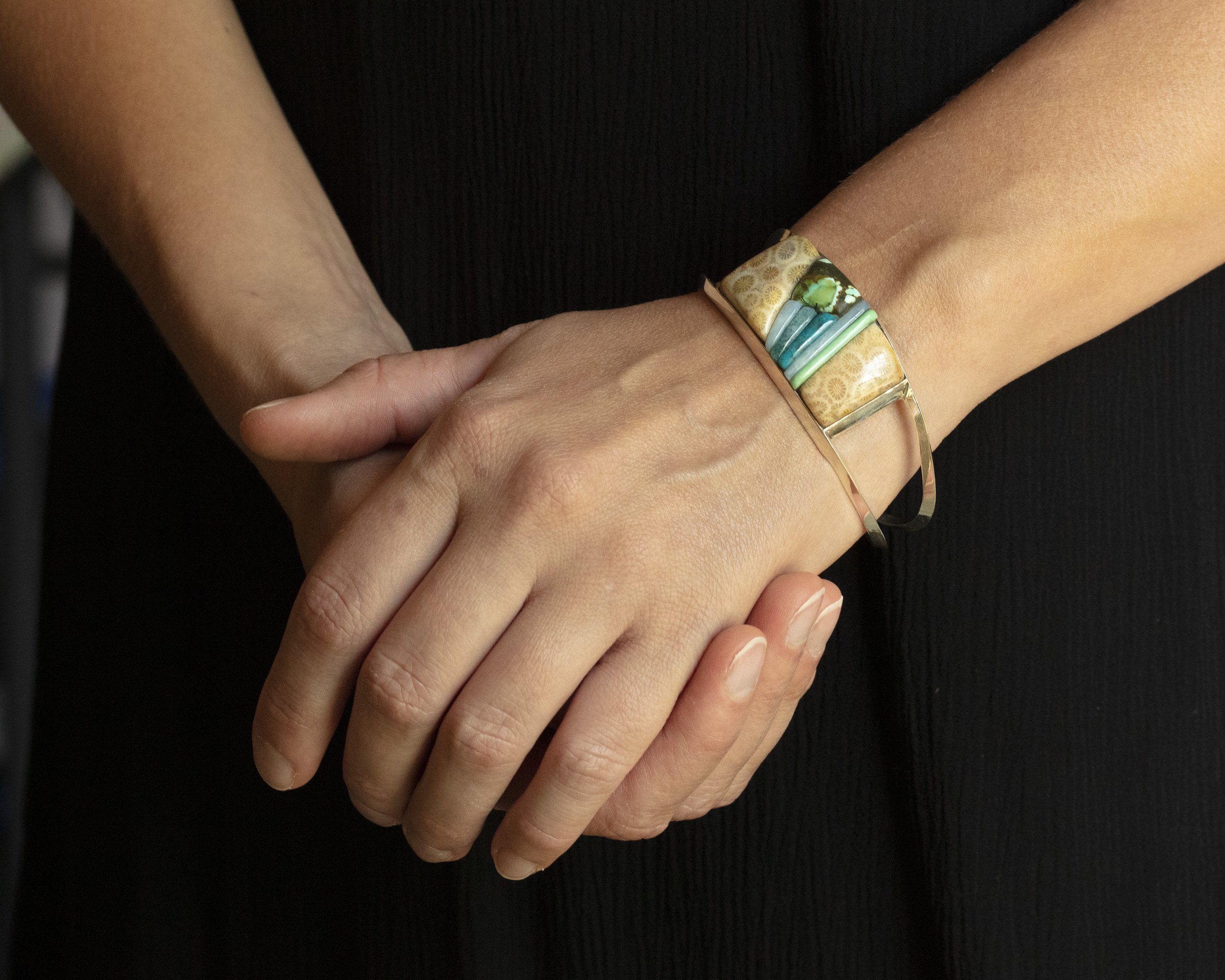
Cobblestone inlay cuff bracelet, showing unique aesthetics of this type of jewelry setting
Inlay jewelry can feel a bit mysterious, since it’s not always obvious how the stones are secured within the metal.
Inlay uses a combination of precise fitting within a recessed cavity and high-strength epoxy to hold the stone in place. Unlike prong or bezel settings, there are no metal claws or edges pressing over the stone; the design instead has an integrated surface.
Depending on the style of inlay, the surface may be completely flush with the metal or may have intentional variation, like in cobblestone inlay designs where texture and dimension are part of the aesthetic.
Is inlay jewelry glued in?
When people hear “glued in,” they often think of inexpensive jewelry made with weak adhesive.
However, the epoxy used in inlay jewelry is not the same as craft glue. It is a structural, waterproof, durable material designed to bond stone to metal and create the seamless surface that inlay is known for.
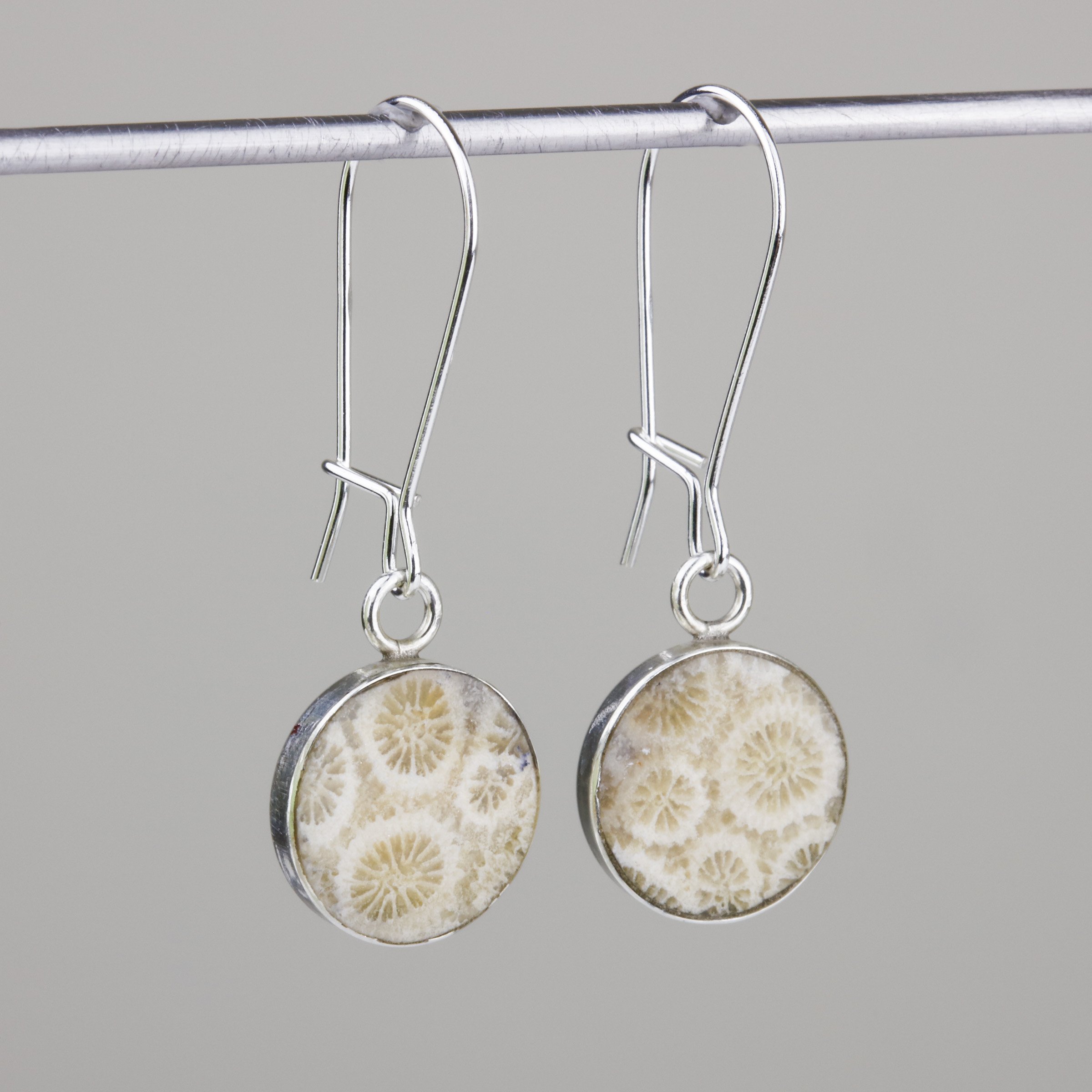
Flush-cut inlays better enhance the patterns in certain stones, like in these agatized coral drop earrings.
Why use inlay instead of traditional stone settings?
Inlay is not a shortcut or replacement for traditional metalsmithing, it’s a different design approach entirely. It allows stone and metal to be integrated into a single surface rather than separated by a raised setting.
Many inlay jewelry artists, including myself, think of inlay as “painting with stones,” where material color, pattern, and metal are combined across the surface of the piece rather than set with prongs or bezels.
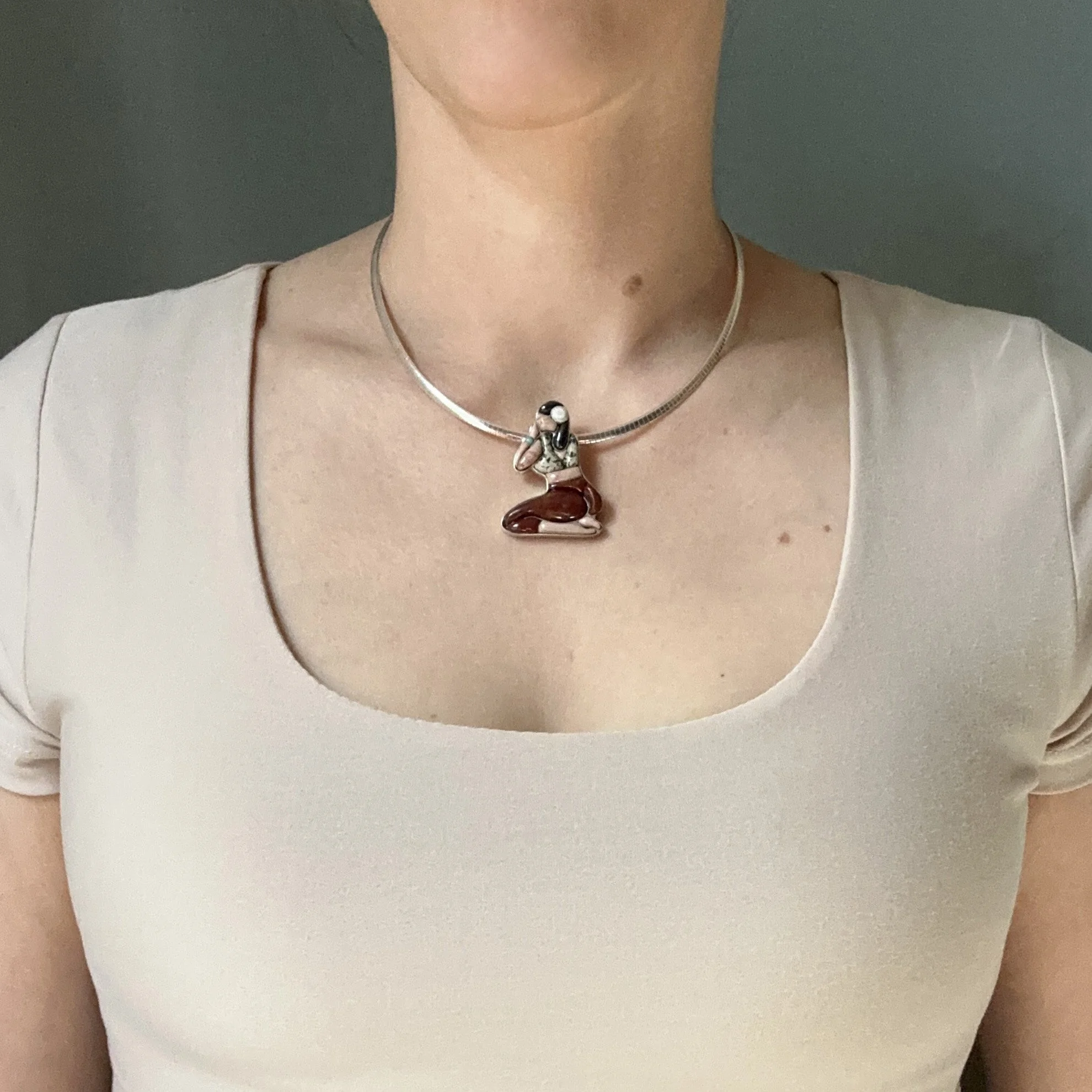
In my figurative inlay pendants is where I use inlay like a painter uses their palette.
Can stones fall out of an inlay?
It is uncommon for stones to fall out of well-made, modern inlay jewelry, but it can happen depending on materials, construction methods, and wear over time.
For example, lower-strength adhesives like cyanoacrylate (CA glue), often used in chip inlay, tend to fail more quickly than the two-part structural epoxy that is always used in my work.
Over time, stones can loosen due to aged adhesive or lack of proper inlay care, especially in heavily worn pieces.
What happens if an inlay gets damaged?
There are typically two types of inlay damage: stone fractures and adhesive aging—and both can often be repaired.
If a stone fractures, it can be carefully removed and replaced with matching material. If the adhesive has aged, a full re-set is usually recommended, where the inlay is cleaned out and re-epoxied for long-term stability.
I’ve also worked on pieces that have been worn daily for over 60 years before needing re-epoxy, which shows how long well-made inlay can last with proper care.
New to inlay jewelry? You can get a deeper explanation of it here.