Hyalite Opal: How Light and Backing Change the Stone
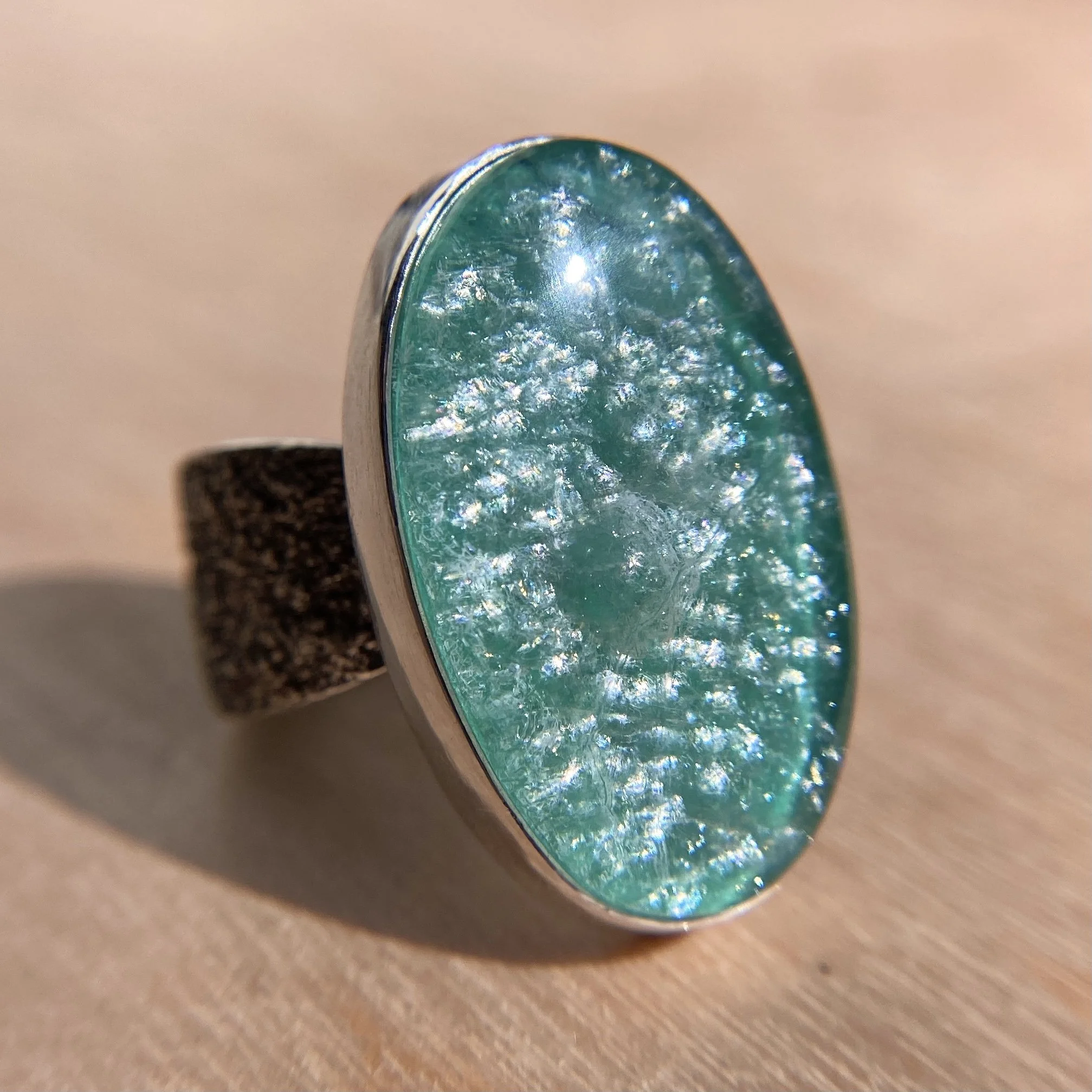
Milford, Utah hyalite opal backed with natural malachite and set in a handmade sterling silver ring.
What is hyalite (and why it’s interesting to work with)
Hyalite opal is an opaline silica (a quartz-based opal). While it can be found in many different locations around the world, the specific hyalite opal from Milford, Utah has a look that can’t be found in any other locales. In the transparent hyalite opal types, it has a look of shimmering bubbles rising up from the ocean floor as the stone is moved around in the sunlight. This is how Milford’s hyalite earned the name “bubble opal.”
As a stone lover, it’s a stone that I can easily get lost in, watching the bubble or strand-like internal formations “roll” in the stone like waves. As stone cutter, Milford’s hyalite opal a fun challenge because the shimmery layers inside the stone can easily be over-cut, leaving you with zero refraction if you get too heavy-handed.
What makes hyalite opal different from precious opal?
There are a few key differences between hyalite opal and precious opal, but the main ones come down to color and patterning.
Because hyalite opal is different from colorful Australian precious opal in its structure, the former often reflects a white or golden sheen in it’s internal structure while the latter refracting the colors of the rainbow— though you will see rainbow speckles inside some Milford hyalite opal.
Another big difference is the internal formations inside the stone. Australian opal has different patterns that appear in the stone like harlequin, flagstone, or ribbon, and hyalite opal has its own unique patterns from bubbles to basketweave.
How I bring out nature’s beauty as a lapidary artist
In some of the more see-through pieces of hyalite opal that have very clear internal patterning, I like to make an opal doublet by adhering the opal to a black stone, usually obsidian. While I love the hyalite as it is, I found through experimentation that a darker background brings out the stone’s crisp internal structures, allowing the stone’s natural details to be seen at a distance and in lower lighting than without the backing.
This led to other studio color tests, backing the opal with colorful stones. Since the internal structure is mostly white, any stone color looked great but medium to dark colors did the best for more stark contrast. Though I was pleasantly surprised at how much I liked the soft look of backing with phosphosiderite—a light pinky-purple stone—as it isn’t a huge contrast from the opal but is still lovely nonetheless. Personally, I prefer to use solid-colored stone backings rather than patterned ones so it doesn’t overwhelm the hyalite opal.
Rare and relatively unheard of, hyalite opal is one of those stones I keep coming back to cut because of how it responds to the light around it, making it a delightful surprise every time you pick it up.