
What is stabilized turquoise?
Updated May 2026
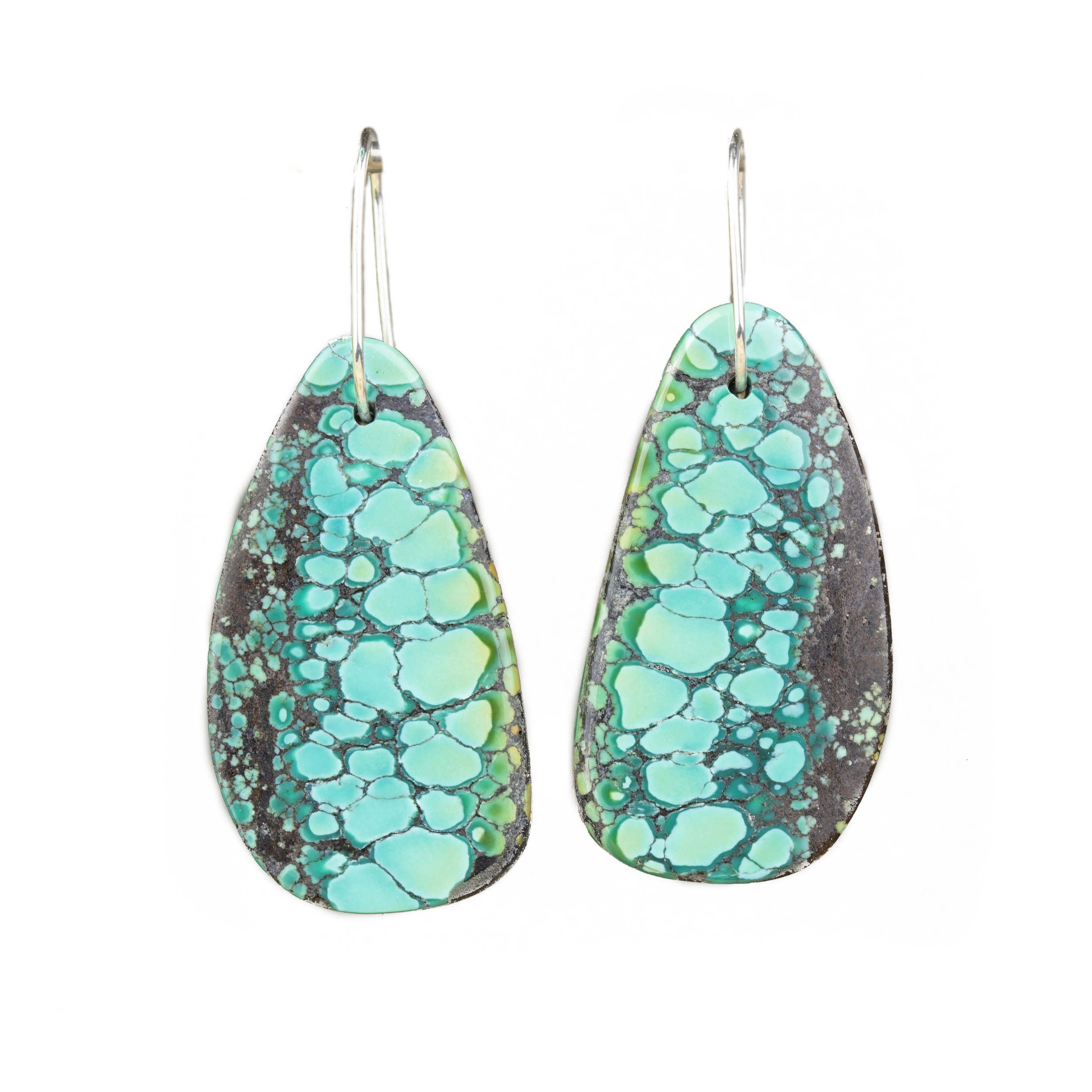
Pair of Hubei turquoise reversible earrings, showing stone material that has been stabilized.
What is natural stone stabilization?
In lapidary, stabilizing is a process used to strengthen and re-enforce all kinds of stones to be used in jewelry (like chrysocolla or dinosaur bone), but most people have first encountered this term used with turquoise.

Slabs of Hubei turquoise before being stabilized.
Why are stones stabilized in jewelry?
Natural stones that have micro fractures or are porous can be prone to cracking or crumbling in jewelry that gets a lot of wear. Stones like this are stabilized to strengthen otherwise fragile material to make it usable.
Turquoise is stabilized because much of the material on the jewelry market is soft to withstand everyday wear and tear, especially in something like a ring. Turquoise often crumbles because the matrix—the brown or black spiderweb host stone—becomes brittle.
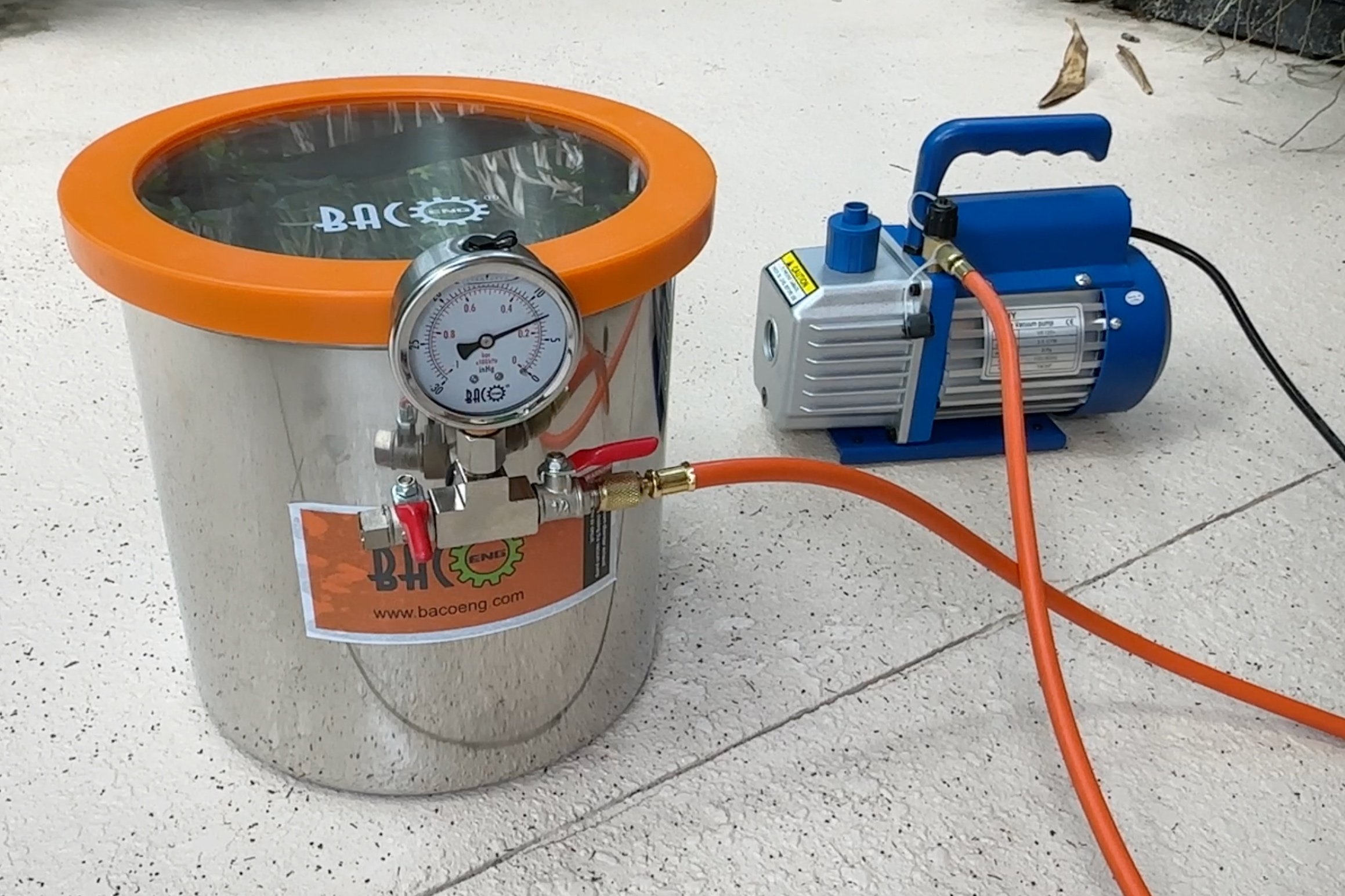
This vacuum chamber is used to stabilize micro-fractures or pores in natural stones, like turquoise, for my jewelry designs.
How are stones stabilized?
To stabilize stones like turquoise, a vacuum chamber is used pull epoxy deep into the pores of the stone. Once the epoxy cures, it fills those pores or micro-cracks to make the stone harder as well as enhance the vibrancy of the colors already present.
Chalky turquoise is hard to cut without it crumbling, so stabilizing it can turn an uncuttable stone into something that can be used for jewelry. Other times the turquoise is cuttable, but stabilizing it will ensure that the stone will last for a long time, making it even more durable. This is important when turquoise is set in rings—as I get a lot of inquiries about repairing broken inlay rings that have not been stabilized.
Vendors should always disclose when a stone is stabilized, since there are buyers who only prefer to buy natural, unstabilized turquoise.

Howlite and natural (non-stabilized) Hubei turquoise cameo necklace.
Is stabilized turquoise real?
Yes, stabilized turquoise is a real, natural material. It is just enhanced—similar to the way some gemstones are heat treated to bring out their color—and allows for the majority of turquoise to be used instead of thrown out because it’s too fragile.
Some other types of turquoise to look out for are:
Reconstituted turquoise: this is when pieces of turquoise are ground into a powder and bound with epoxy. While some are the natural color of the ground turquoise, others are dyed like the Mojave Purple Turquoise.
Imitation turquoise/block turquoise: this can come in a few different forms. Some imitation turquoise is simply a cheaper stone--like howlite—that is dyed blue. Others are just blocks of dyed plastic and contain no natural stone at all.

Hubei turquoise pendant and inlaid bail with obsidian and Kingman turquoise. All of the turquoise is natural and unstabilized.
Do stabilized stones in jewelry make them less valuable?
This is subjective and you will get a different answer depending on who you talk to. Some purists believe that stones should only be all natural without any treatment, whereas others see the potential to preserve the beauty that is already present in a stone to put into jewelry.
Just because you have high-grade turquoise in a piece of jewelry doesn’t mean it isn’t susceptible to breaking. Stabilizing turquoise for jewelry can often give it a longer lifespan.
One concern with stabilizing turquoise is that some epoxy brands can yellow over time, turning a blue turquoise a slight green hue over time, but even unstabilized turquoise can turn green over time as it absorbs skin oils, sweat, household chemicals, or cosmetics.
Whether you decide to go with natural or stabilized turquoise is up to your preference, budget, lifestyle, and how you plan on wearing your jewelry. Knowing your options will help you make the best decision for yourself.